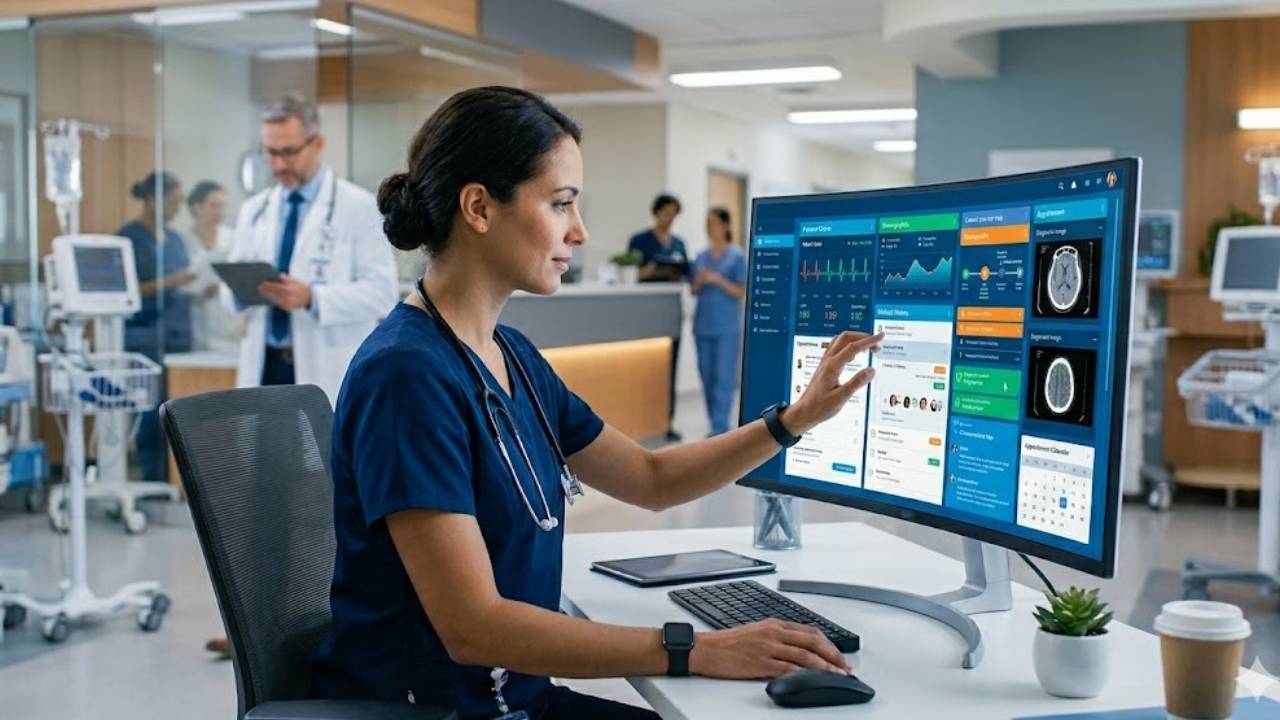
Medical Software Guide 2026 Medical software has become the backbone of modern healthcare in 2026. From managing patient records to enabling advanced diagnostics powered by artificial intelligence, digital tools are transforming how healthcare professionals deliver care. As hospitals, clinics, and research institutions continue to adopt innovative solutions, understanding the types, benefits, and future trends of medical software is more important than ever.
Overview of Medical Software Types
| Type of Medical Software | Primary Function | Key Users | Example Use Case |
|---|---|---|---|
| Electronic Health Records (EHR) | Stores patient medical history | Hospitals, clinics | Access patient data instantly |
| Practice Management Software | Handles scheduling, billing | Clinics, doctors | Appointment booking |
| Medical Imaging Software | Processes scans like MRI, CT | Radiologists | Diagnose diseases |
| Telemedicine Platforms | Enables remote consultations | Doctors, patients | Online doctor visits |
| Clinical Decision Support Systems | Assists in diagnosis & treatment | Physicians | Suggest treatment plans |
| Laboratory Information Systems | Manages lab data | Labs, technicians | Test result tracking |
| e-Prescribing Software | Digital prescriptions | Doctors, pharmacies | Reduce medication errors |
Medical software solutions vary widely depending on their purpose and the needs of healthcare providers. These systems not only improve efficiency but also ensure better patient outcomes by reducing manual errors and enabling faster decision-making.
Types of Medical Software in Detail
Electronic Health Records systems are among the most widely used tools in healthcare. They allow doctors to store, access, and update patient data in real time. This eliminates the need for paper records and improves coordination between different departments.
Practice management software focuses on administrative tasks such as billing, insurance claims, and appointment scheduling. It helps healthcare facilities run smoothly and reduces operational stress on staff.
Medical imaging software is essential for analyzing diagnostic images like X-rays, MRIs, and CT scans. With the integration of AI, these tools can now detect abnormalities with higher accuracy and speed.
Telemedicine platforms have seen massive growth, especially after global health challenges. Patients can now consult doctors from home, making healthcare more accessible and convenient.
Clinical decision support systems use data and algorithms to help doctors make informed decisions. These systems can suggest possible diagnoses, recommend treatments, and even alert physicians about potential risks.
Laboratory information systems streamline lab operations by managing test orders, results, and patient data. This ensures accuracy and quick reporting.
e-Prescribing software allows doctors to send prescriptions directly to pharmacies digitally, reducing errors caused by handwritten prescriptions.
Benefits of Medical Software in Healthcare
Medical software offers numerous advantages that enhance both patient care and operational efficiency. One of the biggest benefits is improved accuracy. Digital systems minimize human errors, especially in data entry and medication management.
Another major advantage is time efficiency. Automated processes reduce the time spent on administrative tasks, allowing healthcare professionals to focus more on patient care.
Data accessibility is also a key benefit. Doctors can access patient records instantly from anywhere, enabling faster diagnosis and treatment.
Cost reduction is another important factor. By streamlining operations and reducing paperwork, healthcare facilities can lower operational costs over time.
Patient engagement has also improved significantly. Many software solutions include patient portals where individuals can view their records, book appointments, and communicate with doctors.
Emerging Trends in Medical Software 2026
Artificial intelligence is leading the transformation of medical software. AI-powered tools can analyze large datasets, detect patterns, and assist in early disease diagnosis. This is especially useful in areas like cancer detection and radiology.
Cloud-based solutions are becoming the standard. They offer scalability, flexibility, and secure data storage, making it easier for healthcare providers to manage information across multiple locations.
Interoperability is another major trend. Modern systems are designed to communicate with each other, ensuring seamless data exchange between different healthcare platforms.
Wearable device integration is also gaining popularity. Medical software can now collect real-time health data from smartwatches and fitness trackers, helping doctors monitor patients remotely.
Cybersecurity is a growing focus as healthcare data becomes more digital. Advanced encryption and security protocols are being implemented to protect sensitive patient information.
Blockchain technology is emerging as a secure way to manage medical records. It ensures data integrity and prevents unauthorized access.
Challenges in Medical Software Adoption
Despite its advantages, adopting medical software comes with challenges. High implementation costs can be a barrier for smaller healthcare providers.
Training staff to use new systems can also be time-consuming. Without proper training, the effectiveness of the software may be limited.
Data privacy concerns are another issue. Healthcare organizations must ensure compliance with regulations to protect patient information.
System integration can be complex, especially when combining multiple software solutions. Compatibility issues may arise if systems are not designed to work together.
How to Choose the Right Medical Software
Selecting the right medical software depends on several factors. Healthcare providers should first identify their specific needs, whether clinical, administrative, or both.
Ease of use is crucial. Software should have a user-friendly interface to ensure smooth adoption by staff.
Scalability is important for growing organizations. The software should be able to expand as the facility grows.
Security features must be a top priority. Look for solutions that offer strong data protection and compliance with healthcare regulations.
Customer support and regular updates are also essential to ensure long-term reliability.
Future of Medical Software
The future of medical software looks promising as technology continues to evolve. AI, machine learning, and big data analytics will play an even bigger role in personalized medicine.
Virtual reality and augmented reality may also become part of medical software, especially in training and surgical planning.
Automation will continue to reduce manual work, making healthcare systems more efficient and patient-focused.
As digital transformation accelerates, medical software will become more integrated, intelligent, and accessible, shaping the future of healthcare worldwide.
Final Verdict
Medical software in 2026 is no longer optional but essential for modern healthcare. It improves efficiency, enhances patient care, and supports data-driven decision-making. While challenges exist, the benefits far outweigh the drawbacks. Investing in the right medical software can significantly transform healthcare operations and outcomes.
Disclaimer
This article is for informational purposes only and does not constitute professional medical or technical advice. Healthcare providers should evaluate their specific needs and consult experts before implementing any medical software solutions.