Sudden cardiac arrest is one of the most serious medical emergencies that can occur without warning. It happens when the heart suddenly stops beating effectively, preventing blood from reaching the brain and other vital organs. Within seconds, the affected person loses consciousness, stops responding, and may stop breathing normally. Without immediate action, survival becomes less likely with every passing minute.
The good news is that bystanders can make a life-saving difference. Learning how to perform cardiopulmonary resuscitation (CPR) and use an automated external defibrillator (AED) can dramatically improve a person’s chances of survival until professional medical help arrives. These skills are not limited to healthcare workers. Anyone can learn them and potentially save a life in an emergency.
Understanding what sudden cardiac arrest is and knowing how to respond confidently can transform an ordinary person into a first responder when every second matters.
Understanding Sudden Cardiac Arrest
Sudden cardiac arrest occurs when the heart’s electrical system malfunctions, causing the heart to stop pumping blood effectively. This condition is different from a heart attack, although a heart attack can sometimes trigger sudden cardiac arrest.
A heart attack occurs when blood flow to part of the heart muscle becomes blocked. During sudden cardiac arrest, the primary problem is an abnormal heart rhythm that prevents the heart from circulating blood properly.
When cardiac arrest occurs:
- The person collapses suddenly.
- They become unresponsive.
- Breathing may stop or become abnormal.
- No effective pulse is present.
Without rapid treatment, permanent brain damage or death can occur within minutes.
Common Causes of Sudden Cardiac Arrest
Several conditions can increase the risk of sudden cardiac arrest. Common causes include:
- Coronary artery disease
- Previous heart attack
- Heart rhythm disorders
- Cardiomyopathy
- Congenital heart defects
- Severe electrolyte imbalances
- Drug overdose
- Severe trauma
- Electrocution
While some individuals have known heart conditions, sudden cardiac arrest can also occur unexpectedly in people who appear healthy.
Recognizing the Warning Signs
Although sudden cardiac arrest often strikes without warning, some people may experience symptoms shortly before collapsing.
Possible warning signs include:
- Chest discomfort
- Shortness of breath
- Dizziness
- Fainting episodes
- Heart palpitations
- Unexplained weakness
Once cardiac arrest occurs, the most obvious signs are sudden collapse, loss of consciousness, and absence of normal breathing.
Recognizing these signs quickly is critical because immediate intervention can save valuable time.
Why Every Minute Matters
The brain requires a constant supply of oxygen-rich blood. When the heart stops pumping effectively, oxygen delivery to the brain rapidly decreases.
For every minute that passes without CPR or defibrillation, the likelihood of survival decreases significantly. Emergency medical services may take several minutes to arrive, making bystander action extremely important.
Early CPR helps maintain blood flow to the brain and vital organs, while an AED may restore a normal heart rhythm.
Together, these interventions create the best opportunity for survival.
What Is CPR?
Cardiopulmonary resuscitation, commonly known as CPR, is an emergency procedure used when a person’s heart has stopped beating effectively.
CPR combines chest compressions and, in some cases, rescue breaths to help circulate blood throughout the body.
The primary goals of CPR are:
- Maintain blood flow to the brain
- Deliver oxygen to vital organs
- Extend survival until advanced medical care arrives
- Increase the chances of successful defibrillation
Even if performed imperfectly, CPR is usually far better than doing nothing.
The First Steps Before Starting CPR
Before beginning CPR, quickly assess the situation.
Ensure Safety
Check that the environment is safe for both you and the victim. Avoid hazards such as traffic, electrical dangers, fire, or unstable structures.
Check Responsiveness
Tap the person’s shoulders firmly and shout to see if they respond.
If there is no response, treat the situation as a medical emergency.
Call for Help
Immediately contact emergency services or ask someone nearby to call.
If other people are present:
- Assign one person to call emergency services.
- Ask another person to locate an AED if available.
Check Breathing
Look for normal breathing for no more than ten seconds.
Occasional gasping or irregular breathing should not be considered normal breathing.
If the person is unresponsive and not breathing normally, begin CPR immediately.
How to Perform Hands-Only CPR
Hands-only CPR is recommended for most adult cardiac arrest emergencies and is easier for untrained rescuers.
Step 1: Position the Person
Place the person flat on their back on a firm surface.
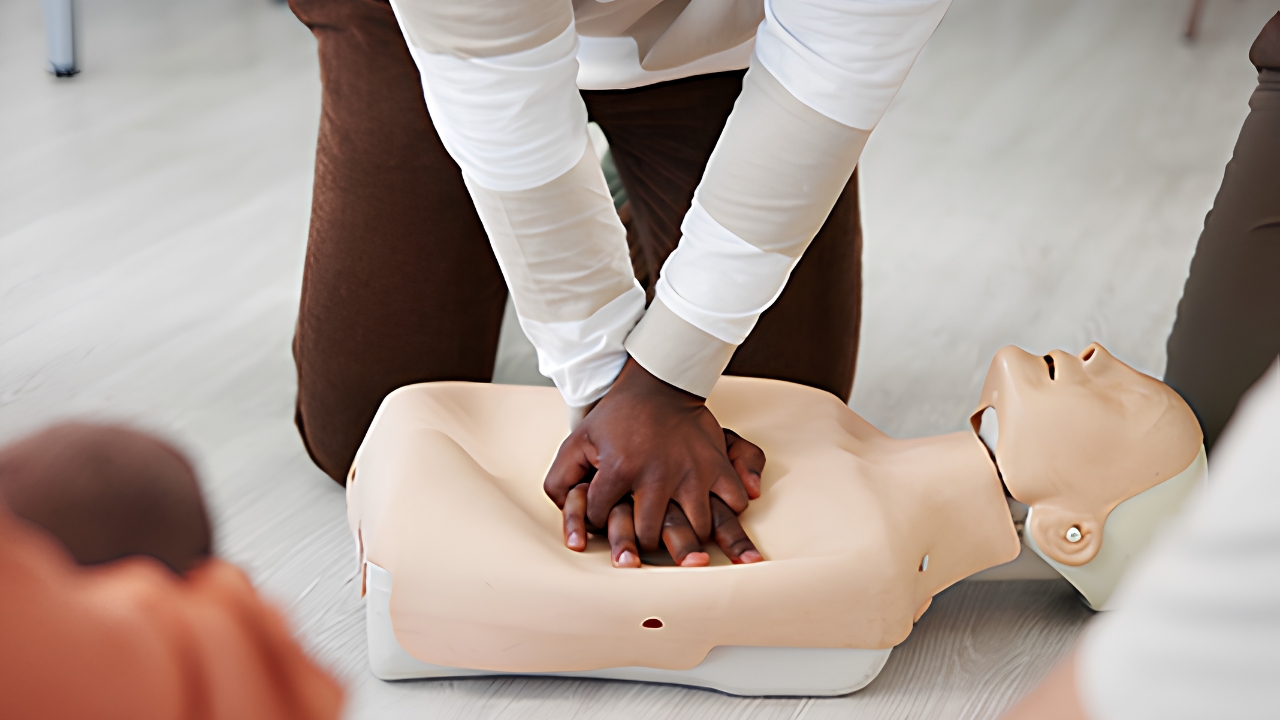
Step 2: Locate Hand Placement
Kneel beside the victim.
Place the heel of one hand in the center of the chest.
Place your second hand on top of the first hand and interlock your fingers.
Step 3: Begin Chest Compressions
Keep your arms straight and position your shoulders directly over your hands.
Press hard and fast in the center of the chest.
Allow the chest to return completely to its normal position after each compression.
Maintain a steady rhythm.
Step 4: Continue Without Interruption
Continue chest compressions until:
- An AED becomes available
- Emergency responders arrive
- The person begins moving or breathing normally
- You are physically unable to continue
Continuous compressions help maintain circulation during the emergency.
CPR With Rescue Breaths
Individuals trained in CPR may provide rescue breaths in addition to chest compressions.
After a series of chest compressions:
- Open the airway by tilting the head back slightly.
- Lift the chin.
- Pinch the nose closed.
- Give a breath lasting about one second.
- Watch for chest rise.
- Give a second breath.
Resume chest compressions immediately afterward.
Rescue breaths may be particularly important for children, infants, drowning victims, and certain respiratory emergencies.
Common CPR Mistakes to Avoid
Several mistakes can reduce the effectiveness of CPR.
Avoid:
- Compressing too slowly
- Compressing too lightly
- Interrupting compressions unnecessarily
- Bending your elbows during compressions
- Performing compressions on a soft surface
Strong, continuous compressions are essential for maintaining blood flow.
What Is an AED?
An automated external defibrillator, or AED, is a portable device designed to analyze heart rhythms and deliver an electric shock when necessary.
AEDs are commonly found in:
- Airports
- Shopping centers
- Schools
- Sports facilities
- Offices
- Hotels
- Public buildings
These devices are designed for public use and provide simple voice instructions to guide rescuers through the process.
How an AED Saves Lives
Certain cardiac arrest rhythms can be corrected through defibrillation.
The AED evaluates the heart’s rhythm and determines whether a shock is needed.
If a shockable rhythm is detected, the AED delivers electrical energy that may allow the heart’s normal rhythm to restart.
The sooner defibrillation occurs, the greater the chance of survival.
How to Use an AED Step by Step
AEDs are specifically designed to be easy to operate, even for people with little or no medical training.
Turn On the Device
Open the AED case and power on the device.
Most units automatically begin providing voice instructions.
Expose the Chest
Remove clothing covering the chest.
Dry the chest if it is excessively wet.
Apply the Electrode Pads
Attach the adhesive pads according to the diagrams printed on them.
Typically:
- One pad is placed on the upper right chest.
- The other pad is placed on the lower left side of the chest.
Allow Analysis
Once the pads are attached, the AED analyzes the heart rhythm.
Do not touch the victim during analysis.
Deliver a Shock if Advised
If the AED recommends a shock:
- Ensure nobody is touching the person.
- Clearly announce that everyone should stand clear.
- Press the shock button if instructed.
Resume CPR Immediately
After the shock is delivered, continue CPR immediately unless the person shows signs of recovery.
Follow all AED prompts until professional help arrives.
Special Considerations When Using an AED
While AEDs are designed for simplicity, certain situations require extra attention.
Water
Move the person away from standing water if possible and dry the chest before applying pads.
Excessive Chest Hair
If chest hair prevents pad contact, quickly remove enough hair to allow proper pad adhesion.
Implanted Medical Devices
Avoid placing pads directly over visible implanted devices such as pacemakers.
Place pads slightly away from the device.
Medication Patches
Remove medication patches from the chest before applying AED pads.
CPR and AED Use in Children
Cardiac arrest in children often results from breathing problems rather than heart disease.
When treating children:
- Use pediatric AED pads if available.
- Follow the device instructions carefully.
- Begin CPR immediately if the child is unresponsive and not breathing normally.
Many modern AEDs include pediatric settings to adjust shock levels appropriately.
Building Confidence Through Training
Although understanding CPR and AED use through reading is helpful, hands-on training provides valuable practical experience.
Training courses often teach:
- Proper compression technique
- Rescue breathing
- AED operation
- Emergency response skills
- Team-based resuscitation
Regular practice helps build confidence and improves readiness during real emergencies.
The Importance of Public Awareness
Communities benefit greatly when more people know CPR and AED use.
Public awareness can lead to:
- Faster emergency response
- Increased survival rates
- Greater confidence among bystanders
- Improved community safety
A single trained individual can make a life-changing difference when sudden cardiac arrest occurs.
Final Verdict
Sudden cardiac arrest is a life-threatening emergency that requires immediate action. Knowing how to recognize the signs, perform CPR, and use an AED can significantly improve a victim’s chances of survival. CPR helps maintain blood circulation while an AED can restore a normal heart rhythm when needed. These simple yet powerful skills empower ordinary people to respond effectively during critical moments. Learning and practicing CPR and AED use today could help save a life tomorrow.
Disclaimer
This article is intended for educational and informational purposes only. It does not replace professional medical training, emergency medical guidance, or certified CPR instruction. Emergency response recommendations may vary based on local guidelines and individual circumstances. Always seek certified training and follow instructions from emergency medical professionals during an actual emergency.